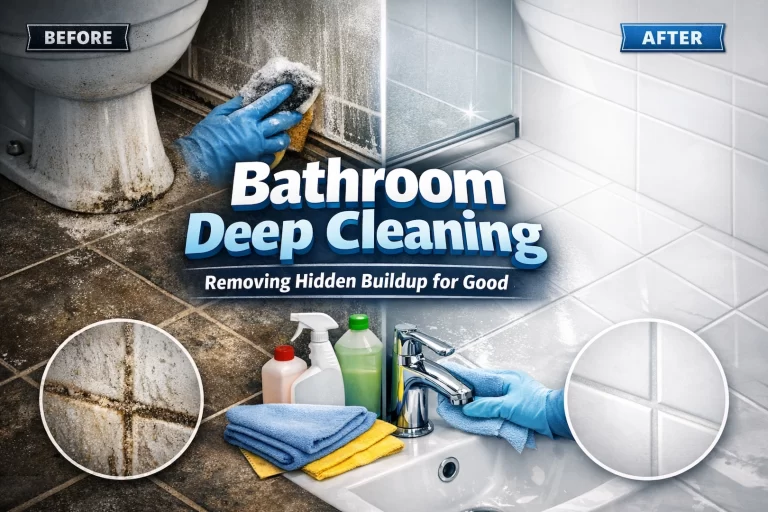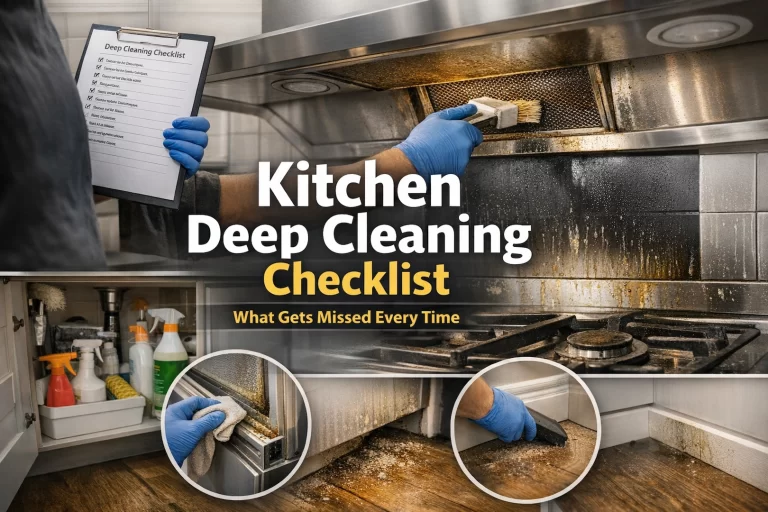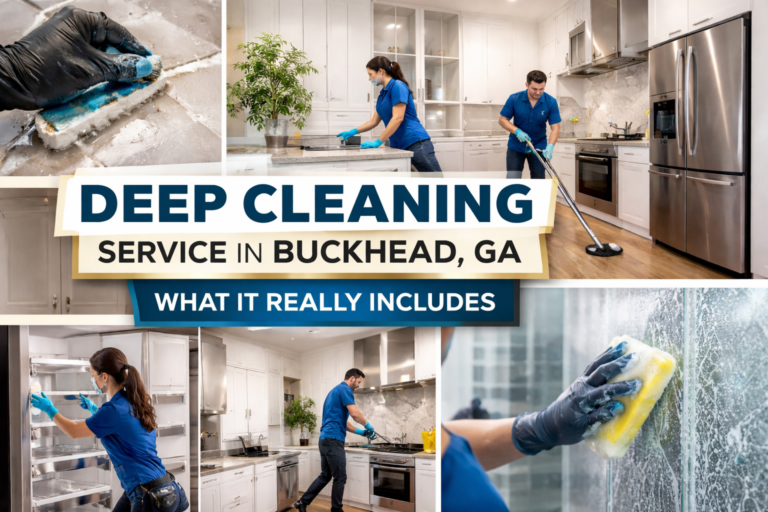
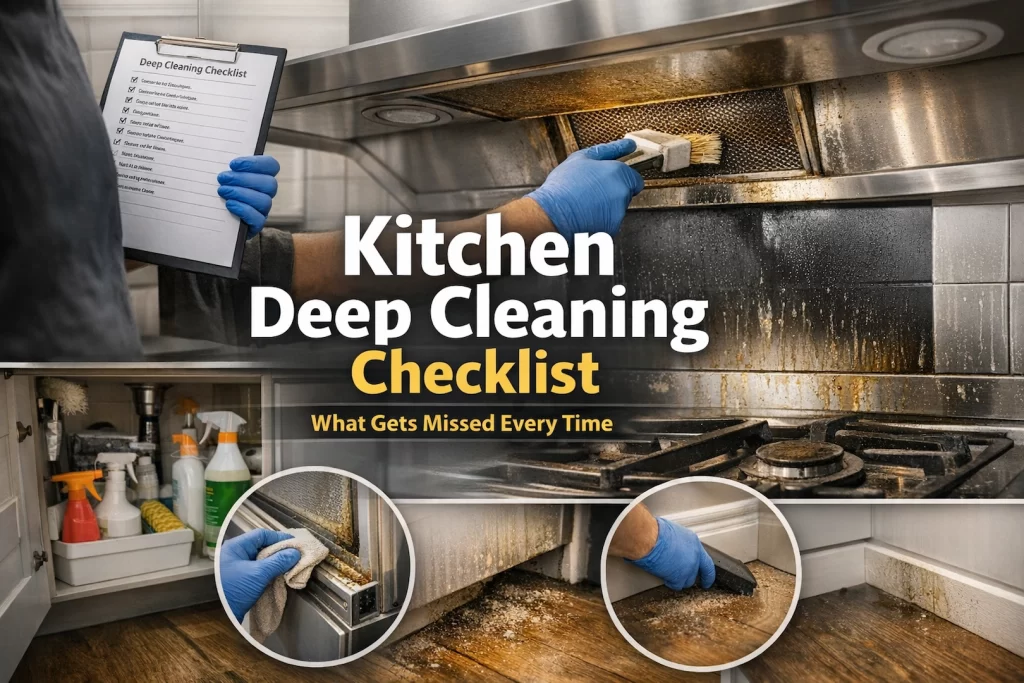
If your kitchen looks clean but still feels off, the issue is rarely what you see. It is what has been building up quietly over time. Grease behind appliances, residue inside cabinets, bacteria in high touch zones, and neglected surfaces that standard cleaning simply does not address.
This is where most homeowners in Buckhead, Atlanta, GA get it wrong. They assume routine cleaning equals a clean kitchen. It does not.
A true kitchen deep cleaning checklist reveals what is consistently ignored even in homes that appear spotless. And that gap is exactly where Deep Cleaning Services in Buckhead, Atlanta, GA create real value.
Why Does a Kitchen Still Feel Dirty After Cleaning
What Is Actually Happening (Problem Awareness)
Even in high end homes, kitchens accumulate layers of buildup, not visible dirt.
The most common hidden issues:
- Grease buildup on surfaces
- Dust mixed with cooking residue
- Bacteria in high touch areas
- Residue inside appliances
- Neglected edges and corners
These are not cleaning failures. They are structural accumulation points.
According to your ICP behavior, the frustration is consistent:
“The kitchen looks clean… but it doesn’t feel clean.”
This aligns directly with the persona insight that surface cleaning does not resolve underlying buildup
Why Standard Cleaning Fails in Kitchens
Surface Cleaning vs Structural Cleaning
| Type of Cleaning | What It Does | What It Misses |
| Regular Cleaning | Maintains appearance | Hidden buildup |
| Deep Cleaning | Removes accumulation | Restores original condition |
Key difference:
- Regular cleaning maintains
- Deep cleaning resets
This distinction is central to positioning. As defined in your communication framework:
“Regular cleaning maintains. Deep cleaning removes buildup.”
What Gets Missed Every Time in Kitchen Cleaning
The Core of a Real Kitchen Deep Cleaning Checklist
Below is a high fidelity breakdown based on real service execution, not generic advice.
1. Inside Appliances Cleaning (The Biggest Blind Spot)
Checklist:
- Interior of oven cleaning
- Inside refrigerator cleaning
- Behind and under appliances
- Microwave interior and ventilation
- Dishwasher filter and seals
Why this matters:
Most homeowners clean around appliances, not inside them.
This leads to:
- Odor buildup
- Bacterial growth
- Reduced appliance efficiency
This is a core entity in kitchen deep cleaning and one of the strongest conversion triggers because it directly connects to invisible dirt.
2. Cabinet Interior and Hidden Surfaces
Checklist:
- Inside cabinets and drawers
- Shelf edges and corners
- Grease residue on upper cabinets
- Handles and touch points
What gets ignored:
Even in luxury kitchens, cabinet interiors accumulate:
- Fine dust mixed with cooking oils
- Sticky residue layers
- Food particles in corners
This is one of the clearest examples of:
“what’s cleaned that you never see, but always feel”
3. Grout, Tile, and Backsplash Buildup
Checklist:
- Grout cleaning
- Tile surface degreasing
- Backsplash residue removal
- Hard water stain removal
Why this is critical:
Grout is porous. It traps:
- Grease
- Moisture
- Bacteria
Over time, this creates permanent discoloration if not treated with professional-grade cleaning methods.
4. High Touch Contamination Zones
Checklist:
- Light switches
- Cabinet handles
- Appliance buttons
- Faucet handles
The overlooked reality:
These areas are touched constantly but cleaned superficially.
This results in:
- Bacterial hotspots
- Cross contamination
- Sticky residue buildup
5. Baseboards, Edges, and Floor Details
Checklist:
- Baseboards cleaning
- Floor edges and corners
- Under cabinets
- Toe kicks
Why this matters:
These areas signal the difference between:
- A “clean looking kitchen”
- A professionally detailed kitchen
How a Professional Kitchen Deep Cleaning Actually Works
Step by Step Breakdown
What is done
A professional deep cleaning targets:
- Hidden buildup
- Hard to reach areas
- High accumulation zones
Why it is necessary
Because:
- Kitchens accumulate layered contamination
- Surface cleaning cannot remove structural dirt
- Hygiene and aesthetics degrade over time
Where it focuses
- Appliances
- Cabinets
- Floors and edges
- Backsplash and grout
- High touch areas
When you need it
Most common triggers:
- Before hosting guests
- After moving in
- Post renovation
- Seasonal reset
- After long periods without detailed cleaning
These scenarios align directly with real buying triggers mapped in the customer journey
Who should do it
- Trained professionals
- Insured cleaning service
- Teams experienced with high end surfaces
Because risk is the primary objection, not price.
How it is executed
- Use of surface specific products
- Manual detail cleaning
- Degreasing techniques
- Targeted disinfection
- Systematic checklist execution
How much effort is involved
Deep cleaning is:
- Time intensive
- Detail focused
- Process driven
It is not a quick service. It is a restoration process.
Practical Example: Real Kitchen Reset Scenario
Before Deep Cleaning
- Kitchen looks clean
- Light grease on surfaces
- Slight odor inside fridge
- Sticky cabinet handles
- Darkened grout lines
After Deep Cleaning
- Surfaces restored to original finish
- Neutral, fresh smell
- Bright grout lines
- Smooth touch surfaces
- Visibly detailed edges and corners
What changed
Not just appearance.
The environment was reset, not maintained.
This is exactly what your ICP values:
- Control of the home environment
- High standard restoration
- Predictable results
Advantages vs Limitations of Kitchen Deep Cleaning
Comparison Table
| Aspect | Deep Cleaning | Regular Cleaning |
| Depth | High | Low |
| Buildup removal | Yes | No |
| Time required | Longer | Short |
| Cost | Higher | Lower |
| Result quality | Restorative | Maintenance |
Key Advantages
- Removes hidden dirt
- Restores original kitchen condition
- Improves hygiene significantly
- Enhances property value perception
- Prepares home for recurring cleaning
Possible Limitations
- Higher upfront cost
- Requires scheduling
- Not designed for frequent repetition
Explanation
Deep cleaning is not meant to replace regular cleaning.
It acts as a baseline reset, after which maintenance becomes effective again.
Final Insight
Most kitchens are not dirty because they are neglected.
They are dirty because they are maintained instead of reset.
And that distinction changes everything when choosing between:
- Professional Cleaning Services in Buckhead, Atlanta, GA
- Or a standard recurring cleaning routine
Kitchen Deep Cleaning by Area: What Most Checklists Still Ignore
Why Breaking Down by Area Changes Everything
Most generic guides list tasks. They do not organize cleaning based on how dirt actually accumulates inside a kitchen.
A real kitchen deep cleaning checklist is not linear. It is zone based, because each area has different:
- Types of buildup
- Cleaning risks
- Required techniques
- Frequency of neglect
This is where Professional Cleaning Services in Buckhead, Atlanta, GA operate differently. They do not clean everything the same way. They clean based on material, usage, and accumulation patterns.
Zone 1: Cooking Area Deep Cleaning (High Grease Accumulation)
What Builds Up Around Cooking Zones
The cooking area is the highest concentration point of:
- Grease buildup kitchen
- Airborne oil particles
- Heat activated residue
- Sticky film on vertical surfaces
Detailed Checklist
Surfaces to clean:
- Stovetop and burners
- Range hood exterior and interior
- Hood filters
- Wall behind stove
- Surrounding countertops
- Control knobs and panels
What Gets Missed
- Inside range hood filters
- Grease film on vertical surfaces
- Residue on backsplash edges
- Sticky buildup under burner grates
Why This Matters
Grease does not stay where you cook. It spreads microscopically and settles over time.
That is why kitchens that are “cleaned daily” still feel heavy or sticky.
This is a classic case of surface cleaning vs structural contamination, a core differentiation in deep cleaning positioning
Zone 2: Sink and Water Exposure Areas
The Hidden Contamination Around Water
Where there is water, there is:
- Hard water stains
- Mineral deposits
- Mold and mildew growth
- Bacterial concentration
Detailed Checklist
Key areas:
- Sink basin and edges
- Faucet and handles
- Under sink cabinet
- Drain and disposal
- Backsplash near sink
What Gets Missed
- Underside of faucet
- Base of sink fixtures
- Cabinet floor under sink
- Moisture trapped corners
Risk Factor
This zone is not just aesthetic.
It is one of the highest hygiene risks in the kitchen, especially in homes with:
- Pets
- Children
- Frequent cooking
Professional Approach
A true deep cleaning includes:
- Descaling techniques
- Mold safe treatment
- Moisture control cleaning
- Surface specific disinfection
Zone 3: Storage Areas (Cabinets and Pantry)
Why Storage Spaces Feel Clean but Aren’t
Cabinets are deceptive.
They look organized, but they accumulate:
- Dust mixed with food particles
- Oil residue from hands
- Invisible buildup on surfaces
Detailed Checklist
Cabinet deep cleaning includes:
- Emptying shelves
- Wiping interior surfaces
- Cleaning drawer tracks
- Sanitizing handles
- Cleaning cabinet tops
What Gets Missed Every Time
- Upper cabinet exteriors
- Cabinet tops (above eye level)
- Drawer rails and corners
- Pantry floor edges
Practical Insight
In high end homes, cabinet finishes are often delicate.
Improper cleaning can:
- Damage wood
- Strip protective coatings
- Leave streaks on premium surfaces
This reinforces the need for surface specific cleaning, a major trust factor for your ICP
Zone 4: Appliances Exterior and Surrounding Areas
The Illusion of Clean Appliances
Appliances are cleaned visually, not structurally.
This creates a false perception of cleanliness.
Detailed Checklist
Exterior cleaning includes:
- Refrigerator doors and seals
- Oven exterior
- Dishwasher front and edges
- Microwave exterior
- Small appliances (coffee machines, etc.)
Surrounding Areas
- Behind appliancesw
- Under appliances
- Side gaps between units
- Wall contact zones
What Gets Missed
- Dust and grease behind appliances
- Food debris under units
- Condensation residue
- Wall stains hidden behind equipment
Why This Is Critical
This area combines:
- Dirt
- Moisture
- Heat
Which creates ideal conditions for:
- Odor buildup
- Bacteria
- Long term staining
Zone 5: Floors, Edges, and Transition Areas
Where Most Kitchens Fail the “Real Clean” Test
Floors are cleaned often.
Edges are not.
Detailed Checklist
Floor deep cleaning includes:
- Full surface cleaning
- Edge detailing
- Corner extraction
- Under cabinet reach
- Transition areas between rooms
What Gets Missed
- Floor edges near cabinets
- Corners behind trash bins
- Under movable furniture
- Transition lines between materials
Why This Defines Perceived Cleanliness
These details are subtle but powerful.
They directly affect:
- Visual sharpness of the kitchen
- Light reflection
- Overall impression of care
This aligns with a key insight:
People do not notice what is clean. They notice what is not.
Advanced Kitchen Deep Cleaning Checklist (Full Overview Table)
Complete Breakdown
| Area | Task | Commonly Missed | Impact |
| Cooking Zone | Degreasing surfaces | Hood filters | High |
| Sink Area | Descaling and sanitizing | Under sink | High |
| Cabinets | Interior cleaning | Cabinet tops | Medium |
| Appliances | Exterior + surrounding | Behind units | High |
| Floors | Deep floor cleaning | Edges and corners | High |
Interpretation
This table shows a pattern:
The highest impact areas are not the most visible ones.
They are the ones:
- Hard to reach
- Easy to ignore
- Accumulate over time
When a Kitchen Needs Deep Cleaning (Real Triggers)
Behavioral Triggers (Based on ICP)
Most homeowners do not schedule deep cleaning randomly.
They act based on specific moments:
Common triggers:
- Hosting guests at home
- Moving into a new property
- After renovation or upgrades
- Seasonal reset periods
- Loss of control over cleanliness
What This Means
This is not just cleaning behavior.
It is environment control behavior.
Your ICP is not reacting to dirt.
They are reacting to:
- Loss of standard
- Loss of control
- Decline in home quality perception
This is consistent with the journey mapping where the trigger is not dirt, but discomfort
Kitchen Deep Cleaning vs Regular Cleaning (Applied Comparison)
Practical Scenario Comparison
Scenario: After 3 Months of Regular Cleaning
| Area | Regular Cleaning Result | Deep Cleaning Result |
| Stove area | Clean surface | Grease removed |
| Cabinets | Organized | Residue removed |
| Floor | Vacuumed | Fully detailed |
| Appliances | Wiped | Internally cleaned |
Interpretation
Regular cleaning creates stability.
Deep cleaning creates transformation.
That is why both are necessary, but not interchangeable.
Position it as:
- A time saving decision
- A risk reduction strategy
- A way to ensure consistency
Strategic Closing Insight of This Section
A kitchen does not become deeply clean by doing more cleaning.
It becomes deeply clean by cleaning what is usually ignored.
And that difference is what separates:
- A maintained kitchen
- From a restored kitchen environment
Professional Kitchen Deep Cleaning Process: What Actually Happens Behind the Scenes
Why Process Matters More Than Effort
Most homeowners assume deep cleaning is about effort.
It is not.
It is about process control, sequencing, and using the correct method for each surface.
That is the difference between:
- Cleaning that looks good temporarily
- Cleaning that restores and stabilizes the kitchen environment
As defined in your framework, this is where authority is built through method, not claims
Step by Step Professional Kitchen Deep Cleaning Process
Phase 1: Assessment and Preparation
What is evaluated before cleaning starts
- Surface types
- Level of buildup
- Sensitive materials
- High accumulation zones
- Appliance condition
Why this step exists
Without assessment, cleaning becomes generic.
And generic cleaning is exactly what your ICP does not trust.
What professionals prepare
- Surface specific products
- Degreasing agents
- Microfiber systems
- Protective tools
Phase 2: Dry Removal of Loose Contamination
What is done
- Dust removal from surfaces
- Debris extraction from corners
- Loose particles removal from cabinets and edges
Why this step is critical
If you apply liquids before removing loose dirt:
- You spread contamination
- You create residue layers
- You reduce cleaning effectiveness
Phase 3: Degreasing and Buildup Breakdown
Core focus
This is where deep cleaning actually begins
Areas targeted
- Cooking zones
- Backsplash
- Cabinet exteriors
- Appliance surfaces
What makes this different
- Use of professional grade degreasers
- Controlled dwell time
- Mechanical agitation
Result
- Grease is broken down, not just wiped
- Surfaces return to original texture
Phase 4: Detail Cleaning and Extraction
What is included
- Grout detailing
- Edge cleaning
- Corner extraction
- High touch sanitation
What separates professionals here
Attention to:
- Baseboards cleaning
- Tight spaces
- Hard to reach zones
These are the exact areas most services skip, even in supposed deep cleaning offers
Phase 5: Wet Cleaning and Surface Treatment
What happens
- Controlled cleaning of all surfaces
- Residue removal
- Surface appropriate product application
Why this matters
Using the wrong product on:
- Stone
- Wood
- Stainless steel
Can permanently damage surfaces.
This is one of the main objections your ICP has:
“Will they damage my home?”
And this step is where that risk is managed.
Phase 6: Final Reset and Quality Check
Final actions
- Visual inspection
- Touch test on surfaces
- Odor neutrality check
- Consistency validation
Outcome
A kitchen that:
- Feels clean
- Looks detailed
- Performs better functionally
Professional vs DIY Kitchen Deep Cleaning
Honest Comparison
Side by Side Analysis
| Factor | DIY Deep Cleaning | Professional Deep Cleaning |
| Time required | High | Low for client |
| Technical knowledge | Limited | Advanced |
| Tools and products | Basic | Professional grade |
| Risk of damage | Medium to high | Controlled |
| Result consistency | Variable | Predictable |
Key Insight
DIY cleaning can improve appearance.
Professional cleaning restores standards and consistency.
When DIY Works
- Light buildup
- Small kitchens
- Maintenance between services
When Professional Is Necessary
- Heavy grease accumulation
- Move in or move out
- Post renovation
- Long periods without deep cleaning
Risks Most Homeowners Underestimate
The Real Problem Is Not Cleaning
It is incorrect cleaning
Common risks
- Damaging natural stone surfaces
- Scratching stainless steel
- Using wrong chemicals on wood
- Spreading grease instead of removing it
- Leaving moisture trapped in cabinets
Why this matters for high end homes
In Buckhead properties, materials are often:
- Custom
- Imported
- High value
Mistakes are not cosmetic.
They are expensive.
How Professional Cleaning Reduces Risk
Key factors:
- Trained teams
- Surface specific products
- Defined process
- Experience with luxury materials
This aligns directly with the decision drivers identified in your ICP:
Risk is the primary barrier. Not price.
How Long Does Kitchen Deep Cleaning Take
Realistic Time Expectations
Based on kitchen size and condition
| Kitchen Type | Estimated Time |
| Small kitchen | 2 to 3 hours |
| Standard kitchen | 3 to 5 hours |
| Large or luxury kitchen | 5 to 8+ hours |
What affects duration
- Level of buildup
- Number of appliances
- Surface materials
- Last time deep cleaning was done
Important Clarification
If a service promises full deep cleaning in a short time frame:
It is likely not a true deep cleaning.
Cost vs Value: What You Are Actually Paying For
Cost Factors
Main variables:
- Kitchen size
- Complexity
- Buildup level
- Service scope
- Frequency
What the Client Is Really Paying For
- Time saved
- Risk reduction
- Professional execution
- Consistent results
- Restoration of home standard
Strategic Insight
Cheap cleaning focuses on speed.
Deep cleaning focuses on outcome and control.
This is aligned with your positioning strategy to avoid commoditization
How Often Should You Deep Clean Your Kitchen
Recommended Frequency
General guideline:
- Every 3 to 6 months for active kitchens
- Every 6 to 12 months for low usage kitchens
Adjust based on:
- Cooking frequency
- Presence of pets
- Household size
- Lifestyle
Strategic Approach
The most effective model:
- Perform a full deep cleaning
- Maintain with regular cleaning
- Schedule periodic resets
Why this works
Because:
- Deep cleaning removes buildup
- Regular cleaning prevents accumulation
Together, they create a stable system.
Decision Moment: When to Hire vs When to Wait
Signs You Should Not Wait
- Kitchen feels sticky even after cleaning
- Persistent odors
- Visible grout discoloration
- Grease returning quickly after cleaning
- You avoid certain areas when cleaning
What This Indicates
These are not cleaning issues.
They are buildup saturation signals
Strategic Closing Insight of This Section
Deep cleaning is not about doing more work.
It is about doing the right work, in the right order, with the right method.
And that is exactly why most kitchens:
- Stay visually clean
- But never truly reset
Kitchen Deep Cleaning Checklist (Complete, Actionable Version)
The Most Complete Kitchen Deep Cleaning Checklist You Can Follow
This is a fully structured, professional level checklist designed to reflect real execution standards used in Deep Cleaning Services in Buckhead, Atlanta, GA.
1. Appliances (Interior and Exterior)
Tasks:
- Clean inside oven and remove baked on grease
- Deep clean refrigerator interior, shelves, and seals
- Sanitize microwave interior and exterior
- Clean dishwasher filter and door seals
- Wipe and degrease appliance exteriors
Explanation
Appliances are one of the largest sources of hidden contamination.
When ignored, they create:
- Odor buildup
- Bacterial growth
- Reduced performance
This is not optional in a real deep cleaning. It is foundational.
2. Cabinets and Storage Areas
Tasks:
- Clean inside cabinets and drawers
- Wipe cabinet exteriors and remove grease
- Sanitize handles and touch points
- Clean cabinet tops
- Detail drawer tracks and edges
Explanation
Cabinets accumulate invisible residue layers over time.
Even in organized kitchens, this buildup:
- Affects hygiene
- Creates sticky surfaces
- Degrades material over time
3. Countertops and Surfaces
Tasks:
- Remove grease and residue from countertops
- Clean and sanitize backsplash
- Detail edges and seams
- Clean around fixtures
Explanation
This is where most people stop.
But surface cleaning alone does not remove:
- Embedded grease
- Micro residue layers
Which is why kitchens still feel unclean after cleaning.
4. Sink and Water Areas
Tasks:
- Deep clean sink basin and edges
- Remove hard water stains
- Sanitize faucet and handles
- Clean under sink cabinet
- Disinfect drain area
Explanation
This is a high bacteria zone.
Ignoring details here leads to:
- Odor issues
- Mold risk
- Hygiene problems
5. Floors and Base Areas
Tasks:
- Deep clean floors
- Detail edges and corners
- Clean under cabinets
- Clean baseboards
- Remove buildup from transitions
Explanation
Floor edges and baseboards are one of the clearest signals of cleaning quality.
They separate:
- Basic cleaning
- From detail focused deep cleaning
6. High Touch Areas
Tasks:
- Disinfect light switches
- Clean cabinet handles
- Sanitize appliance controls
- Clean frequently touched surfaces
Explanation
These areas accumulate bacteria quickly.
They are cleaned often, but rarely cleaned properly.
What 90% of Kitchen Cleaning Checklists Still Miss
The Hidden Layer Problem
Even detailed checklists fail because they ignore how dirt behaves.
Common omissions
- Grease film on vertical surfaces
- Buildup behind appliances
- Cabinet tops
- Inside appliance seals
- Moisture under sinks
Why These Areas Matter
These are the exact zones responsible for:
- Odors
- Sticky surfaces
- That “something feels off” sensation
This connects directly with the psychological trigger:
The home looks clean, but does not feel clean
The Psychology of a Clean Kitchen (Why Detail Changes Everything)
What People Actually Perceive
People do not analyze cleanliness logically.
They respond to:
- Smell
- Texture
- Visual sharpness
- Light reflection
What Deep Cleaning Changes
- Air quality improves
- Surfaces feel smooth
- Light reflects better
- Kitchen feels lighter and controlled
Strategic Insight
This is why deep cleaning creates what can be called a:
“reset effect”
A complete shift in how the space feels.
This is directly aligned with lifestyle based positioning and high performance households
How This Applies to Homes in Buckhead, Atlanta, GA
Why Kitchens in Buckhead Require a Different Standard
Homes in Buckhead, Atlanta, GA often have:
- Larger kitchens
- High end materials
- Open concept layouts
- High usage
What This Changes
- More surface area for buildup
- Greater visibility of imperfections
- Higher expectations of cleanliness
Practical Reality
A kitchen that is “acceptable” in a standard home:
Is not acceptable in a high standard home.
This reinforces why Professional Cleaning Services in Buckhead, Atlanta, GA must operate at a higher level of detail and precision.
Strategic Takeaways for Homeowners
What You Should Do Moving Forward
Action plan:
- Identify buildup areas in your kitchen
- Use a structured checklist, not random cleaning
- Focus on hidden zones, not visible surfaces
- Avoid using incorrect products on sensitive materials
- Decide when professional support is necessary
Explanation
Without structure, cleaning becomes repetitive but ineffective.
With structure, cleaning becomes:
- Predictable
- Efficient
- Effective
Final Perspective
A clean kitchen is not defined by how often it is cleaned.
It is defined by what is actually removed.
And what is removed determines:
- How the space feels
- How it performs
- How it is perceived
That is why most kitchens remain in a cycle of:
clean → looks good → feels off → clean again
Until a real deep cleaning breaks that cycle.